

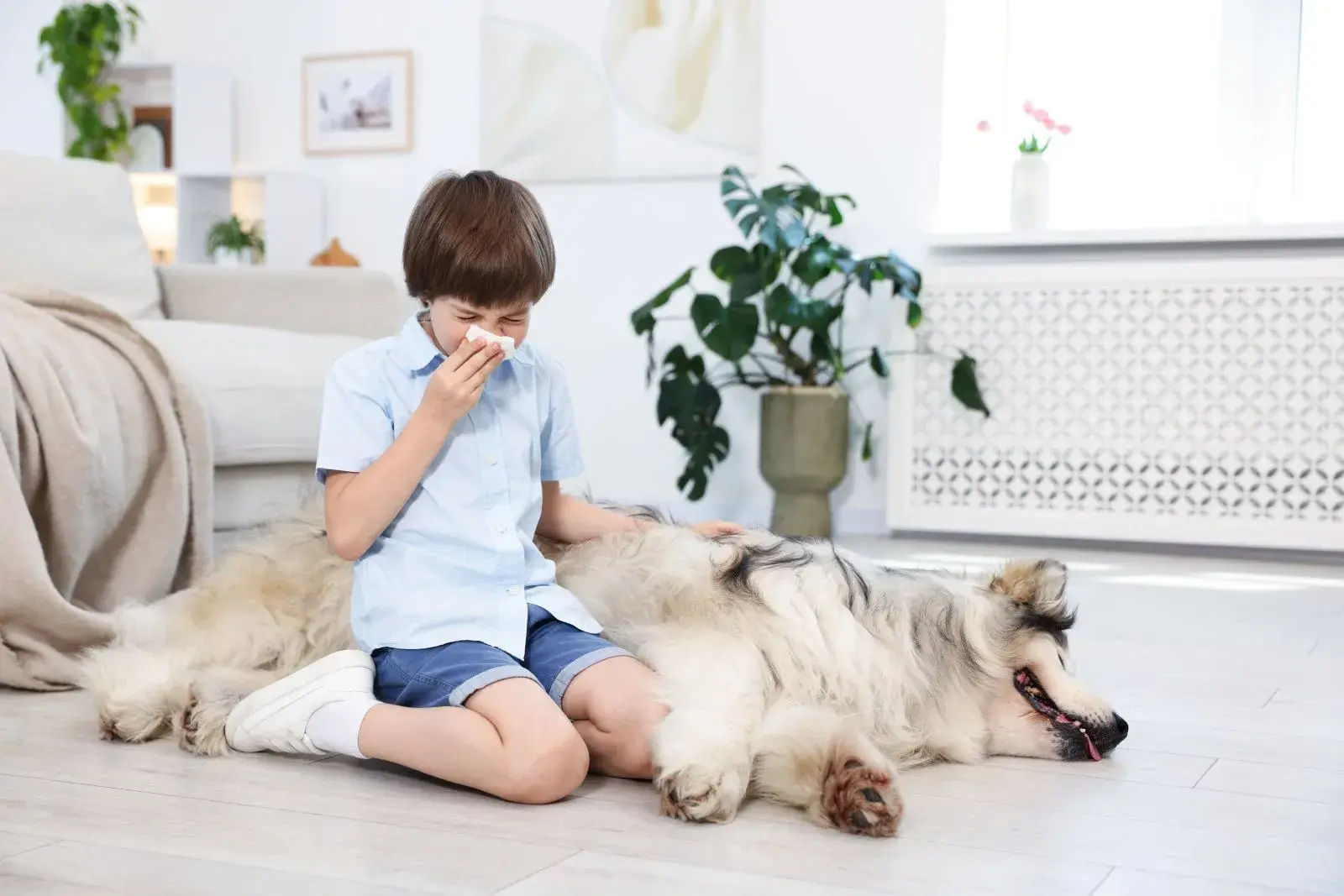
If your child frequently sneezes, has a stuffy nose, or develops itchy eyes at home, your family pet could be the trigger. Pet allergies in children can cause persistent symptoms that resemble a cold or seasonal allergies, making it difficult to identify the cause.
An allergist can help determine whether your child is allergic to a dog or cat and recommend appropriate ways to manage symptoms without immediately considering rehoming your pet.
Can Dogs and Cats Cause Allergies in Children?
Yes. Dogs and cats produce proteins that can trigger allergic reactions in sensitive children. These allergens are found in skin flakes (dander), saliva, and urine.
Pet allergens can accumulate on carpets, furniture, bedding, and clothing. As a result, children may experience symptoms even when an animal is not nearby.
Common signs of pet allergies include:
- Frequent sneezing, a runny nose, or nasal congestion
- An itchy nose or throat
- Red, watery, or itchy eyes
- Coughing or throat irritation
- Itchy skin or hives after contact with an animal
- Wheezing or breathing difficulties in children with allergy-related asthma
Symptoms may appear shortly after contact with a pet or persist with regular exposure at home.
How Can I Tell If My Child Is Allergic to Our Dog or Cat?
A recurring pattern of symptoms can offer an important clue. Your child might sneeze after cuddling the family cat, develop itchy eyes after playing with the dog, or experience congestion in rooms where the pet spends time.
Unlike a typical cold, which generally improves over time, allergy symptoms may persist or return whenever exposure occurs. However, dust mites, mold, pollen, and other environmental allergens can cause similar symptoms.
Keep track of when your child’s symptoms occur and whether they improve away from home. If symptoms frequently return, disrupt sleep, or interfere with school and daily activities, consider an allergy evaluation.
An allergist can assess your child’s symptoms and determine whether testing for dog or cat allergies may be appropriate.
Can Children Develop Pet Allergies After Living With a Pet for Years?
Yes. Children can develop pet allergies even after living with the same dog or cat for years without noticeable symptoms.
Allergies develop when the immune system becomes sensitized to a particular allergen. Symptoms may appear after a period of exposure, although the timing varies.
Before assuming the family pet is responsible, consider other possible triggers, including seasonal pollen and dust mites. An allergist can review your child’s medical history and symptoms to help identify the likely cause.
How Is a Pet Allergy Diagnosed in Children?
An allergy evaluation typically includes a review of your child’s symptoms, medical history, and exposure to pets and other environmental allergens.
Depending on the findings, an allergist may recommend skin allergy testing to assess sensitivity to cat or dog allergens. Blood testing for allergen-specific IgE may also be appropriate in certain circumstances.
Test results must be interpreted alongside your child’s symptoms. A positive result indicates sensitization but does not necessarily mean that exposure causes a clinical allergy.
At Shoreline Allergy of CT, children and adults can receive individualized allergy evaluation and care to help identify potential triggers and guide treatment decisions.
Should I Rehome My Pet If My Child Has Allergies?
Not necessarily. The decision depends on the severity of your child’s symptoms, whether asthma is present, and how well symptoms respond to treatment and exposure-reduction measures.
Several strategies may help reduce pet allergens at home:
- Keep pets out of the bedroom. Create a pet-free sleeping space for your child.
- Use a HEPA air purifier. A properly sized purifier may help reduce airborne particles.
- Clean regularly. Vacuum carpets with a HEPA-filter vacuum and wash bedding and other fabrics frequently.
- Encourage handwashing. Have your child wash their hands after petting animals and avoid rubbing their eyes.
- Discuss treatment options. An allergist can recommend ways to control symptoms based on your child’s specific allergies.
These measures may reduce exposure but cannot eliminate all pet allergens. No dog or cat breed is completely hypoallergenic.
If your child has persistent symptoms or allergy-related asthma, discuss continued pet exposure with their healthcare provider before making decisions about rehoming.
Can Immunotherapy Help Children With Pet Allergies?
For some children with environmental allergies, allergen immunotherapy may be considered when symptoms remain difficult to manage. Treatment is tailored to the allergens involved and the child’s individual needs.
Shoreline Allergy of CT offers sublingual immunotherapy (SLIT), which involves placing prescribed allergy drops under the tongue. However, its suitability for children with dog or cat allergies depends on the specific allergen and clinical circumstances. An allergist can explain whether this approach is appropriate and discuss its potential benefits and limitations.
When to seek emergency care: Seek emergency medical care if your child experiences significant difficulty breathing or throat swelling after possible allergen exposure.
Pediatric Allergy Testing in Branford, Connecticut
If you suspect your child is allergic to your family pet, identifying the trigger is an important step toward managing symptoms and making informed decisions about continued exposure.
Shoreline Allergy of CT provides personalized allergy evaluation and treatment for children and adults in Branford, Connecticut, and surrounding communities. The practice can help assess your child’s symptoms, determine whether allergy testing is appropriate, and discuss options for managing environmental allergies.
To learn more or schedule an appointment, visit Shoreline Allergy of CT or call 203-643-6901.
This article is for general educational purposes and does not replace individualized medical advice or an allergy evaluation.